

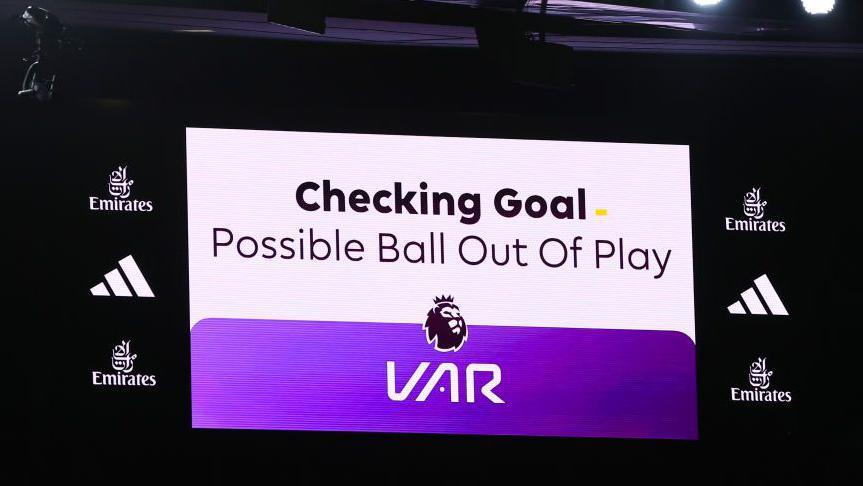
Boundary-tracking systems could resolve contentious incidents in top competitions.
FIFA is trialing cutting-edge systems that can ascertain if the ball went out of play prior to a goal was scored.
The dubbed 'Out of Bounds' system is one of a series that were trialled in three Intercontinental Cup matches in Qatar recently.
Concurrently, FIFA has expanded its 'Real-time 3D Recreation' technology to facilitate line-of-sight judgements for offsides faster and more transparent.
This technology provides two virtual feeds, accessible by the match officials and broadcast audiences, which mimic the sightlines of each goalkeepers.
These new technologies have been jointly developed by FIFA and Hawk-Eye Innovations. It remains to be seen whether they will be made for use in national competitions.
How the Innovative Technology Could Clear Up Disputes
Major leagues like the English top flight have witnessed numerous hotly-debated incidents in the past few years which this technology could have clarified.
In a previous campaign, a controversial moment occurred when VAR determined a player had kept the ball from going out before a decisive goal. The VAR did not have the necessary camera angle to conclusively show the ball was out.
There have also been a number of 'visual obstruction' offside calls this season. In one instance, claims were made that an forward was blocking the goalkeeper's view of the ball as a goal was taken.
The underlying 'Out of Bounds' system employs the same player and ball tracking and configurations as the latest automated offside detection systems.
It is presently still only in offline testing but was provided with the chance to show its reliability in the Qatar-based tests.
In the tournament final, a goal was disallowed through VAR after it was determined the ball crossed the byline in the build-up.
In a parallel development, FIFA also held additional tests of instant audio notifications for offside, which debuted at a recent global competition.
This measure is designed to cut down on the frequency of late assistant referee's flags in clear-cut cases.
The drive towards faster notifications is partly a response to player welfare. In a previous event, a player suffered a significant injury after play was allowed to continue from a clear offside position.
The governing body hopes that more immediate signaling of offside can avoid such unfortunate incidents from happening in the first place.


